
Kornwurm: What It Is, Signs & How to Get Rid of It
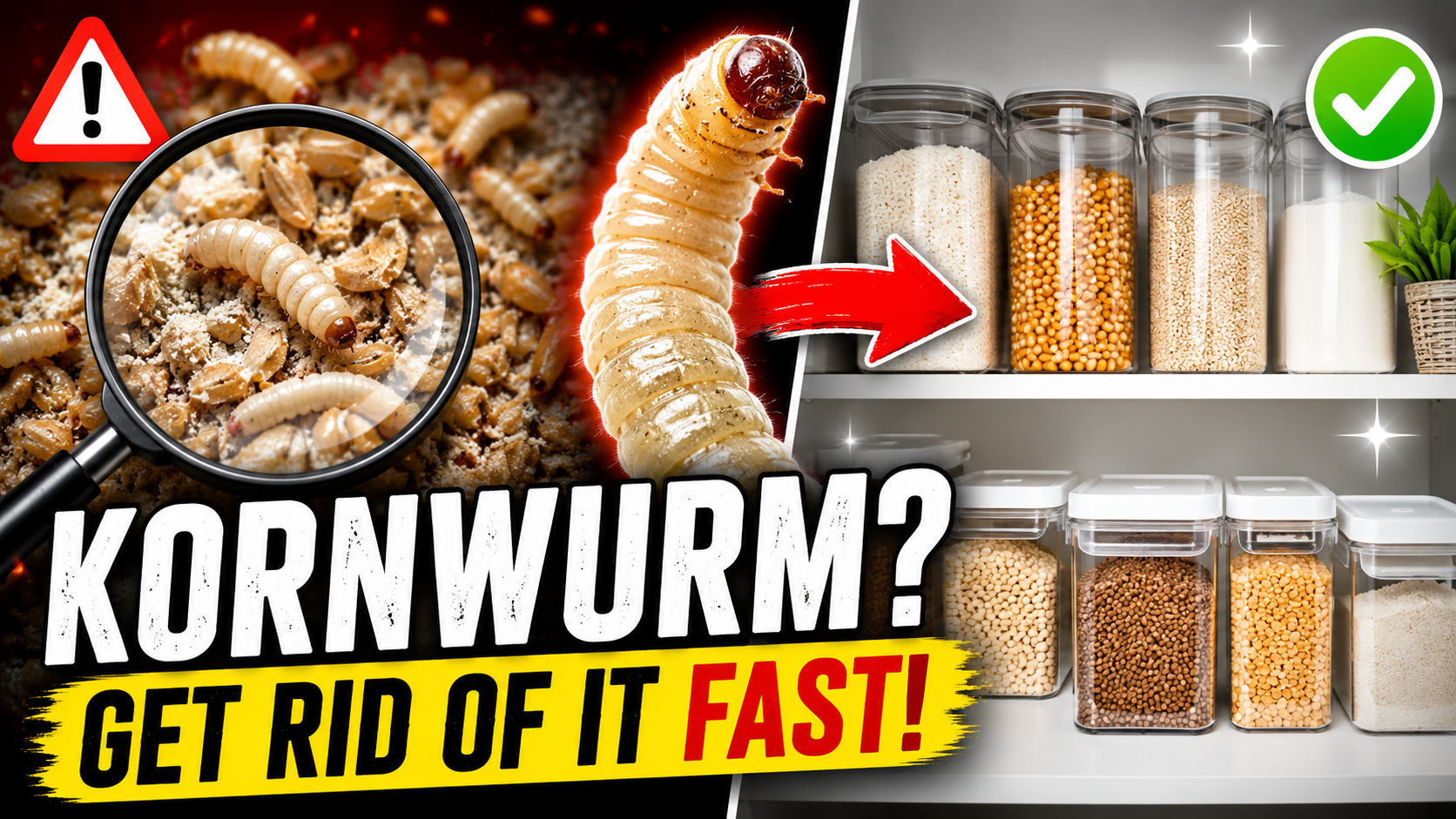
You open a bag of rice, pour it into the pot — and something moves. Or maybe you notice a fine dust at the bottom of your flour container, tiny holes in your wheat kernels, or small dark beetles crawling across your pantry shelf. If any of this sounds familiar, there is a good chance you are dealing with a Kornwurm.
The word comes from German and simply means “grain worm” — but behind that simple name lies one of the most persistent and sneaky household pests known to home cooks and food storers alike. A Kornwurm is not one specific insect; it is a term used to describe the larvae of grain-infesting pests, most commonly the grain weevil (Sitophilus granarius). These larvae develop silently inside individual grain kernels, feeding on the interior while remaining completely hidden from view — often for weeks before any visible signs appear.
What makes Kornwürmer particularly frustrating for homeowners is that by the time you notice the problem, the infestation is usually already well underway. A single female grain weevil can lay hundreds of eggs over her lifetime, and in warm conditions, a full generation from egg to adult can be completed in just five weeks.
The good news? With the right knowledge, Kornwurm infestations are entirely preventable — and very treatable. In this guide, you will learn exactly what a Kornwurm is, how to identify one, what damage it causes, and — most importantly — how to get rid of it and make sure it never comes back.
What Is a Kornwurm?
If you have ever opened a bag of rice, flour, or grain and found tiny beetles or dusty hollowed-out kernels, you may have already encountered a kornwurm. The word comes from German and literally means ‘grain worm’ — a fitting name for one of the most common pantry pests found in homes and food storage areas around the world.
A kornwurm is not a single insect species, but rather a term that describes the larval stage of grain-infesting insects. The most well-known is the grain weevil (Sitophilus granarius), a small beetle whose larvae develop entirely inside individual grain kernels, making them nearly invisible to the naked eye until serious damage has already been done.
Understanding what a kornwurm is, how it behaves, and what conditions allow it to thrive is the first step toward protecting your home and pantry from infestation.
| Quick Facts: Kornwurm at a Glance | |
| What is it? | A grain-infesting larva (grain worm) |
| Scientific name | Sitophilus granarius (grain weevil) |
| Where found? | Pantries, grain silos, warehouses, mills |
| What does it eat? | Wheat, rice, corn, barley, oats, rye |
| Dangerous to humans? | Not directly — but contaminates food |
| How to eliminate? | Remove infested items, clean, use airtight containers |
Types of Kornwurm: Know Your Pest
Not all grain worms are the same. Two main types of insects are responsible for most kornwurm infestations in home pantries and food storage areas.
1. Grain Weevil Larvae (Sitophilus granarius)
The grain weevil is the most notorious kornwurm culprit. Adult females bore tiny holes into individual grain kernels, deposit a single egg inside, then seal the hole. The larva hatches and feeds on the grain from within, pupates inside the kernel, and eventually chews its way out as a fully developed adult — often leaving only a hollow shell behind.
Because development happens entirely inside the kernel, grain weevil infestations are extremely difficult to detect early. By the time you notice adult beetles crawling across your pantry shelf, the infestation may already be well established.
Key traits of grain weevil larvae:
- Cream-coloured, legless, and C-shaped
- Develop entirely inside grain kernels
- Prefer wheat, barley, rye, oats, and corn
- Cannot survive well outside of stored grain
2. Grain Moth Larvae
Several moth species, including the Indianmeal moth (Plodia interpunctella) and the grain moth (Sitotroga cerealella), produce caterpillars that infest stored grains. Unlike weevil larvae, moth larvae feed on the surface and between kernels, producing distinctive silky webbing that causes grains to clump together.
Signs of grain moth larvae:
- Silky webbing woven through grain
- Clumped or sticky grain products
- Small caterpillars or pupae in food
- Adult moths flying near pantry or kitchen lights at night
The Kornwurm Life Cycle: How Infestations Develop
Understanding how these pests reproduce helps explain why infestations can seem to appear ‘out of nowhere’ and spread so rapidly.
- An adult female grain weevil finds a suitable kernel and bores a small cavity into it.
- She deposits a single egg inside and seals the hole with a waxy secretion.
- The egg hatches into a larva (the kornwurm), which feeds on the grain interior.
- After several weeks, the larva pupates inside the kernel.
- A new adult chews through the kernel wall and emerges, ready to mate and repeat the cycle.
- A single adult female can lay up to 300 eggs over her lifetime, leading to rapid population growth.
In warm conditions (around 25–30°C / 77–86°F), an entire lifecycle from egg to adult can be completed in as little as 5 weeks. This means a small, undetected infestation can grow into a serious problem very quickly — especially in summer.
How to Spot a Kornwurm Infestation
Early detection is the key to minimising damage. Here is what to look for when inspecting your pantry:
Small Dark Beetles
Adult grain weevils are small (2–4 mm), reddish-brown to black, and have a distinctive long snout. If you see tiny beetles inside grain, rice, or flour bags, this is a clear sign of an active infestation.
Hollow or Damaged Kernels
Pick up individual grains of wheat or rice and hold them up to a light source. Hollow kernels with small exit holes are a tell-tale sign that kornwurm larvae have developed and departed.
Fine Grain Dust
A layer of fine powdery dust at the bottom of a grain bag or storage container is often the frass (waste) left behind by feeding larvae. This is one of the earliest detectable signs of infestation.
Webbing and Clumping
If you notice grains sticking together or silky threads woven through your food, grain moth larvae are likely present. This webbing can contaminate entire containers of flour, cereal, or oats.
Musty Odour
A heavily infested grain supply may develop a musty or off smell due to insect waste, heat generated by the colony, and mould growth encouraged by increased moisture levels.
Kornwurm vs. Grain Weevil: What Is the Difference?
Many people use these terms interchangeably, but there is an important distinction worth understanding when identifying your infestation.
| Feature | Kornwurm (Larva) | Grain Weevil (Adult) |
| Stage | Larval stage | Adult insect |
| Location | Lives inside grain kernels | Moves freely outside grain |
| Visibility | Very hard to detect | Easier to identify (dark beetle) |
| Damage type | Eats grain interior | Reproduces and spreads infestation |
| Threat level | Causes direct feeding damage | Accelerates colony growth |
In practice, seeing either the larva or the adult indicates the same infestation. However, knowing which stage you are dealing with helps you assess how advanced the problem is and how aggressively you need to respond.
What Damage Can Kornwürmer Cause?
Kornwurm infestations may seem like a minor nuisance, but they can have serious consequences for food safety and your household budget.
Direct Food Damage
- Hollowed-out, ruined grain kernels
- Reduced nutritional value of affected food
- Significant weight and volume loss in stored grain
- Contamination of flour, cereal, and grain-based products
Indirect Consequences
- Increased moisture from insect activity encourages mould growth
- Insect waste (frass) contaminates food that may otherwise look intact
- Allergens from insect fragments can affect sensitive individuals
- Entire pantry restocks may be required in severe infestations
How to Get Rid of Kornwürmer: Step-by-Step
Discovering a kornwurm infestation in your home can be alarming, but it is entirely manageable with a methodical approach.
Step 1 — Identify and Remove All Infested Products
Carefully inspect every dry food item in your pantry: grains, flour, rice, pasta, cereals, dried beans, bird seed, and pet food. Seal infested items in a plastic bag immediately and dispose of them in an outdoor bin. Do not shake infested items inside, as this spreads eggs and adults to new areas.
Step 2 — Deep Clean Your Pantry
Empty your pantry shelves completely. Use a vacuum cleaner with a nozzle attachment to remove debris, grain dust, and insects from every corner, crack, and shelf edge. Pay particular attention to shelf joins, drawer runners, and wall gaps where eggs and pupae can hide. After vacuuming, wipe all surfaces with a damp cloth and a mild detergent. Allow to dry fully before restocking.
Step 3 — Inspect Neighbouring Products
Even products that appear fine on the surface may harbour kornwurm eggs or early-stage larvae. Inspect the exterior of all packaging for damage or small holes, and consider discarding any products that were stored close to confirmed infestations.
Step 4 — Apply Temperature Treatments If Needed
Extreme temperatures can kill kornwurm at all life stages. For products you are unsure about:
- Freezing: Place sealed bags in the freezer at -18°C (0°F) for at least 4 days. This kills eggs, larvae, and adults.
- Heat treatment: Spread grain thinly on a baking tray and place in an oven at 60°C (140°F) for 30 minutes.
Step 5 — Transfer Surviving Stock to Airtight Containers
Once treatment is complete and your pantry is clean, transfer all dry goods into hard-sided airtight containers made of glass, metal, or thick plastic. Avoid using the original cardboard or thin plastic packaging, as grain weevils can chew through or squeeze past weak seals.
How to Prevent Kornwurm Infestations
Prevention is far more effective — and far less stressful — than dealing with an active infestation. These simple habits can dramatically reduce your risk.
Storage Habits
- Store all grains, flour, cereals, and dry goods in sealed airtight containers.
- Never mix old and new stock in the same container without inspecting both.
- Practice first-in, first-out stock rotation to prevent old grain from sitting undisturbed for months.
- Avoid buying in bulk quantities that you cannot use within 2–3 months.
Pantry Hygiene
- Clean pantry shelves every 2–3 months.
- Vacuum cracks and corners where grain dust accumulates.
- Check for damage or holes in packaging before buying from shops.
- Keep pantry areas dry — grain weevils thrive in humid conditions.
Inspection at Purchase
- Inspect all grain and flour packaging before bringing it home.
- Avoid products with damaged, torn, or punctured packaging.
- For bulk purchases, consider freezing new grain for 4 days before storing.
Frequently Asked Questions
Are kornwürmer harmful to humans?
Kornwürmer and grain weevils are not directly harmful to humans — they do not bite, sting, or carry disease. However, they contaminate food products with their waste, shed skins, and body fragments, which can trigger allergic reactions in sensitive individuals. Any heavily infested food should be discarded rather than consumed.
Can kornwürmer spread from one food to another?
Yes. Adult grain weevils can fly short distances and will readily move from one food product to another in search of new grain to infest. This is why a single infested bag of rice can quickly lead to contamination across an entire pantry if not caught early.
How long does a grain weevil infestation last without treatment?
Without intervention, infestations can persist and grow indefinitely. Each generation can be completed in as little as 5 weeks under warm conditions, meaning populations can explode rapidly. The sooner you act, the easier the infestation is to eliminate.
Do bay leaves or other natural remedies repel kornwürmer?
Some homeowners swear by placing dried bay leaves in grain containers as a natural deterrent, and some anecdotal evidence suggests grain weevils dislike the scent. However, this should be considered a supplementary measure only — bay leaves will not eliminate an existing infestation and cannot substitute for proper airtight storage.
Is it safe to eat food that has had kornwürmer in it?
Consuming a small number of insects is generally not harmful to healthy individuals — grain weevils are not toxic. However, food heavily contaminated with insect waste, frass, and body fragments should be discarded on food safety and quality grounds. When in doubt, throw it out.
Conclusion
A kornwurm infestation is one of the most common — and most preventable — household pest problems. Whether you are dealing with grain weevil larvae hidden inside individual kernels or grain moth caterpillars spinning webs through your flour, the response is the same: act quickly, clean thoroughly, and upgrade your storage.
The good news is that with a bit of vigilance, the right containers, and a few simple pantry hygiene habits, most homeowners can keep these unwelcome guests out of their kitchens for good. Inspect your dry goods regularly, store them correctly, and do not give kornwürmer the warm, humid, undisturbed conditions they need to thrive.
